Choosing an Inverter/Charger for Your Yacht: MultiPlus and Quattro Guide
An undersized or wrongly specified inverter/charger can turn one of a yacht's most expensive electronics investments into a first-season disappointment.
On a yacht, the inverter/charger is the heart of the system that charges the battery bank from shore power or the generator, while also supplying 230 V AC needs from the batteries at anchor or underway. An inverter/charger that isn't sized and specified correctly will either fall short or stress the battery bank with the wrong charge profile, shortening its life. This guide walks through the selection criteria for combined units such as MultiPlus and Quattro.
What does an inverter/charger actually do?
A combined inverter/charger packs three core functions into one enclosure:
- Inverter: Converts DC power from the battery bank into sine-wave AC for 230 V appliances such as the galley, washing machine or microwave.
- Charger: Charges the battery bank with a profile matched to the battery chemistry whenever shore power or the generator is connected.
- Automatic transfer switch: When shore power drops or the generator starts, the AC output automatically switches to inverter mode; the user notices no interruption, or only a very brief one.
Sizing power and current
The first step is a realistic list of loads that will run at the same time. A microwave or coffee maker draws a short but high inrush current, which can be far above its continuous rating. The table below gives a rough starting point by typical yacht size; the exact figure should always be confirmed against a real load list.
| Boat size/use | Typical inverter power | Typical charge current (12 V) |
|---|---|---|
| Small sailboat, basic loads | 1.2–1.6 kVA | 30–50 A |
| Mid-size motor yacht, galley + AC support | 2–3 kVA | 50–100 A |
| Large motor yacht/gulet, full galley | 3–5 kVA | 100–150 A |
| High-demand, dual AC source (Quattro) | 5 kVA and up | 150 A and up |
When choosing the charge current, as important as bank capacity is the current limit of the existing shore power connection. On a 16 A shore connection, both the inverter/charger's charge current and any other AC loads onboard must stay within that limit. We cover shore power capacity and safe use in marina shore power connection: safe use of 16A/32A/63A.
Sine wave type and sensitive electronics
Nearly all modern inverter/chargers produce pure sine wave output, which is far safer for motor-driven appliances, charging adapters and sensitive electronics than modified square wave. Cheap modified-wave units should be avoided, especially in systems where the inverter/charger will also power navigation electronics, air-conditioning inverters or medical devices, where pure sine is essential.
Charge profile by battery type
When choosing an inverter/charger, it's critical that the charging side can be adapted to your battery chemistry. AGM, gel, flooded and LiFePO4 batteries all require different absorption and float voltages, and the wrong profile shortens battery life and can affect warranty coverage. We cover the right maintenance and charging approach by battery type in boat battery maintenance and lifespan guide, and lithium-specific charging requirements in guide to switching to lithium LiFePO4 batteries.
MultiPlus or Quattro?
- MultiPlus: Manages a single AC input (for example, shore power only). Sufficient for most mid-size yachts. Victron Energy's MultiPlus-II series is a widely used example in this category.
- Quattro: Monitors two independent AC inputs (such as shore power and a generator) and switches automatically between them. With PowerAssist, a limited shore connection or a small generator can meet higher momentary loads with battery support.
- Parallel/three-phase configurations: For very high power demand, multiple units can be connected in parallel or three-phase; common on larger motor yachts and generator-free, high-demand designs.
Installation checklist
- Location: Choose a well-ventilated spot, protected from moisture, with easy service access.
- Cable sizing: Size DC input cables to the unit's maximum current and run length, keeping voltage drop within limits.
- Fuse and main switch: Fit an appropriately rated fuse and battery main switch on the DC input.
- AC wiring and grounding: AC wiring between shore power, generator and inverter output must be properly separated and grounded per ABYC E-11.
- Monitoring: Victron Energy GX devices or similar monitoring panels let you track system status and alarm history remotely.
- Programming: Confirm battery type, charge current limit and transfer switch priorities are set correctly.
PowerAssist and generator downsizing
PowerAssist, found on Quattro and some MultiPlus models, temporarily boosts the capacity of a limited AC source (shore power or a small generator) with support from the battery bank. For example, a 16 A shore connection alone may not cover an air-conditioning compressor's start-up current; with PowerAssist active, the inverter instantly tops up the missing current from the batteries so the shore breaker doesn't trip. This feature can help boats limited to 16 A marina connections, or gulets and sailboats running on a small generator, avoid investing in a larger, more expensive generator.
VRM monitoring and remote tracking
Modern inverter/chargers can connect to the internet via a GX device (Cerbo GX, Venus GX) to let you remotely monitor battery status, charge current, AC input/output state and alarm history. Confirming the system is running healthily while the boat is at the marina or while you're away is especially valuable during the off-season. We cover setting up and using this kind of remote monitoring in remote yacht monitoring: sensors, GSM and Victron VRM.
Migrating from older systems and compatibility
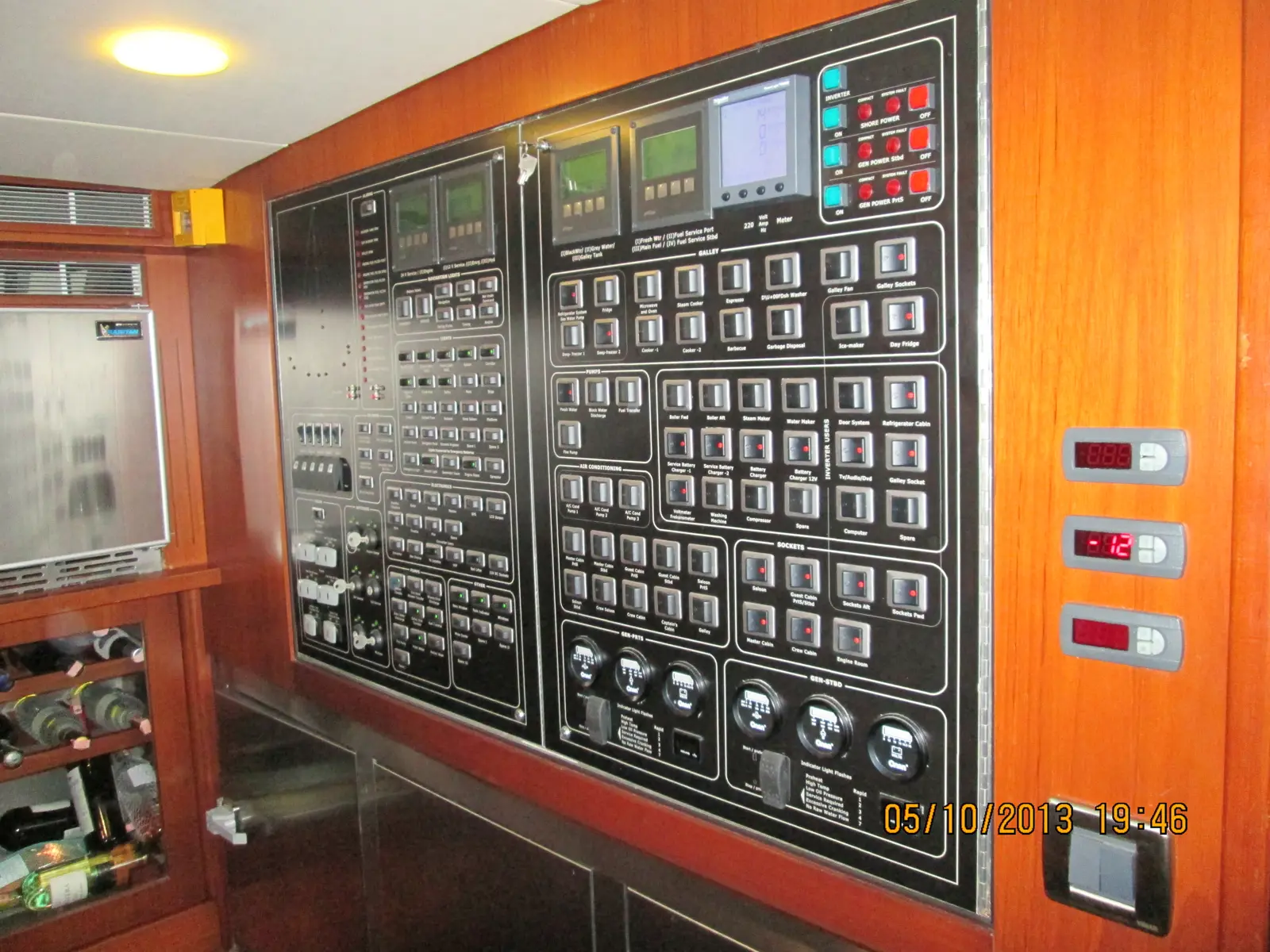
Installing a modern inverter/charger on an older yacht also calls for reviewing the existing AC panel, grounding arrangement and galvanic isolation measures. Older panels in particular may lack a safe transfer switch between shore power and the generator/inverter output, creating a risk of both sources being connected to the AC bus at once — a serious hazard to both equipment and people. If you're evaluating whether a panel refit is needed as part of a refit, see refitting the electrical panel on older yachts.
Common mistakes
- Sizing the inverter only by "continuous power" without accounting for inrush current.
- Leaving the charge profile on default settings instead of matching it to battery chemistry.
- Choosing a charge current that exceeds the shore power connection's current limit.
- Mounting in a poorly ventilated, damp corner of the engine room.
- Undersizing cable for long DC runs, causing excessive voltage drop.
A correctly sized and correctly programmed inverter/charger is the invisible but everyday backbone of a yacht's power system — it adds comfort while protecting the battery bank's life.
Inverter/charger installation with Aslan Yacht
From our workshop in Turgutreis we travel to marinas and boatyards around the Bodrum peninsula, managing everything from load analysis to wiring and commissioning. Learn more about our energy and battery systems service, or get in touch with us for your yacht's inverter needs.
Frequently asked questions
Is a combined inverter/charger better than separate units?
On most yachts a combined inverter/charger (MultiPlus type) saves both space and wiring, and switches automatically between shore power and generator. For very high power demands or where redundancy matters, separate units can make sense.
What size inverter, in kVA, should I buy?
Add up the highest combination of loads that will run simultaneously (e.g. microwave plus coffee maker plus a few outlets) and allow margin for inrush current. Sizing kVA with a safety margin above continuous demand prevents nuisance trips.
What's the key difference between Quattro and MultiPlus?
Quattro can manage two separate AC inputs (for example shore power and a generator) and use PowerAssist to combine generator or shore power with battery support; MultiPlus is built for a single AC input. Quattro suits boats with high demand or two AC sources.